
Can the Government Be Negligent For Not Shutting Down A “Smoker”?

A smoker. In the combat sports world this is slang for an unsanctioned / unregulated fight. Cutting corners. Avoiding regulation. Exposing athletes to the dangers of a potentially neglectful environment.

Last week the BC Court of Appeal released reasons for judgement addressing whether the government could be liable for not shutting down such an alleged event.

The recent case (British Columbia Athletic Commissioner v. Simon Fraser University) involved a tragic outcome at an amateur level martial arts contest.

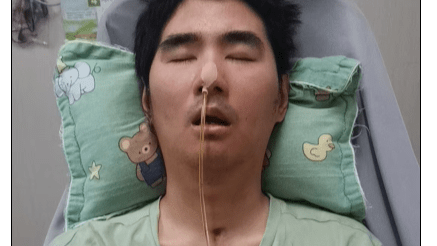
By way of background the Plaintiff Zhenhuan Lei, who was a PhD student at the University of British Columbia at the time, entered into what was advertised as a light contact martial arts tournament. He was struck in the head multiple times at the tournament. He eventually lost consciousness and was diagnosed with a subdural hematoma (bleeding of the brain) and remains in a persistent vegetative state. The competition was not regulated by the BC Athletic Commission. In the lawsuit one issue was whether the contest needed to be regulated and if so was the government negligent in not intervening.

Lei sued various parties alleging they negligently contributed to his life altering injuries. Simon Fraser University (“SFU”) was one of the parties named. SFU hosted the event on their property. SFU countersued the provincial government arguing the Athletic Commission’s office was aware that the promoter was hosting events that the Commission considered to be kickboxing without proper licensing. SFU argued the government should have shut the event down before it started and it was negligent in not doing so.

The government asked the court to dismiss the claims against them. A request that initially failed. Taking the matter to the BC Court of Appeal the court dismissed SFU’s claim. In doing so the Court left the door open for such a claim to proceed but found SFU’s allegations deficient. In short the Court said such a claim might be able to proceed but the pleadings must set out material facts setting out the government’s knowledge of the event and failure to act.

Below are some of the court’s key reasons:

[1]            On October 14, 2023, Zhenhuan Lei participated in a mixed martial arts tournament called the Western Canadian Martial Arts Championship (the “Tournament”). The Tournament was held at Simon Fraser University (“SFU”). While participating in the Tournament, Mr. Lei was catastrophically injured. As a result, his committee sued the Tournament organizers and SFU for damages for personal injury. SFU brought third party proceedings against the British Columbia Athletic Commissioner (the “Athletic Commissioner”) and the Province of British Columbia (the “Province”).

[2]            The Province applied to strike the third party notice on the basis that it was plain and obvious that the third party notice disclosed no cause of action. In a cross-application, SFU applied to amend its third party notice to, among other things, add Patrick Gilday, the Athletic Commissioner, personally. The applications were heard together in January and March 2025. The judge dismissed the Province’s application to strike and dismissed SFU’s application to add the Athletic Commissioner in his personal capacity. The Province and SFU have both appealed that decision.

[3]            This appeal raises questions about the extent to which a government regulator can be found liable in tort for injuries to individuals taking part in regulated activities. For the reasons that follow, I would allow the Province’s appeal on the basis that the third party notice does not give rise to a cause of action against the Province and should have been struck. SFU’s appeal of the judge’s dismissal of its application to amend its pleadings to add Mr. Gilday personally was withdrawn in the course of oral submissions so it need not be considered by this Court.

[46]         Unregulated combat events are generally prohibited under the Code because they involve activities that are broadly understood to be harmful to the public good, not just to the individuals participating in the events. The Code prohibition is indicative of a societal recognition that unregulated fighting as a spectator sport, even with the consent of the participants, violates community values and is contrary to the public interest.

[47]         Further, where there is to be an exemption from the Code prohibition, the statute and regulations advance the public good in another way, to ensure that event organizers need to have a licence and permit, which in turn impose some strict rules on the conduct of events. This benefits the members of the public who attend such events, by enabling them to discern between legal and licensed events and those that are neither.

[48]         Thus the purpose of the ACA is to regulate the industry of combat sports for the benefit of participants, organizers, the general public and the communities in which these events take place. It is not a statute with a singular purpose, and one of its purposes is the advancement of the public interest.

[49]         Generally, a statutory scheme that exists to advance the public good will not provide a sufficient basis to create proximity for the purposes of establishing a private law duty of care. This is true even if a potential claimant is a person who benefits from the proper implementation of the scheme: Frazier at para. 46; Wu at para. 56. Part of the rationale for not recognizing a private law duty of care in these circumstances is that such a duty may interfere with the government actor acting in accordance with its duties to the public: Wu at para. 56; Imperial Tobacco at para. 47.

[50]         SFU relies on Fullowka as an example of a case where a private law duty of care was grounded in a regulatory statute. In Fullowka,nine miners were killed when an explosive detonated at their workplace during a labour dispute. At issue was whether the regulator had a private law duty to keep the miners safe. The legislative scheme in question imposed upon the government regulator a positive duty to act. Specifically, the mining inspector was required to order the immediate cessation of work in a mine that the inspector considers unsafe. In this way, the legislative scheme in Fullowka is different than the ACA. The ACA does not impose any positive duty to act on the Athletic Commissioner in any circumstance.

[51]         In this case, a relationship of proximity between the Athletic Commissioner and individual athletes cannot be grounded in the legislation’s purpose, nor in any statutory duty to act. In my view, it is plain and obvious that the ACA and its regulations do not expressly or by implication create a private relationship of proximity between the Athletic Commissioner and individual athletes giving rise to a prima facie duty of care.

[52]         A combination of specific interactions between the parties and the government actor’s statutory powers and duties can give rise to the necessary proximity to ground a private law duty of care. However, the established approach to proximity when considering an allegation that a duty of care is owed by a government regulator requires the court to “look to the interaction between the regulator and the plaintiff to determine whether a sufficiently close and direct relationship exists to impose a prima facie duty of care”: Waterway Houseboats Ltd. v. British Columbia, 2020 BCCA 378 at para. 243 [emphasis added]. See also Tekamar Mortgage Fund Ltd. v. British Columbia, 2023 BCCA 20 at para. 67.

[53]         In this case, there is no allegation that there were any interactions whatsoever between the plaintiff and the Athletic Commissioner. SFU seeks to ground its theory of proximity on interactions between the Organizers and the Athletic Commissioner. A similar theory of liability was advanced in the companion cases of Cooper and Edwards v. Law Society of Upper Canada, 2001 SCC 80,where the plaintiffs allegedly suffered harm at the hands of a party involved in a regulated activity (in Cooper,a mortgage broker; in Edwards,a lawyer) and then alleged negligence on the part of the governmental authority in charge of regulating the activity that gave rise to the plaintiff’s loss (in Cooper, the Registrar of Mortgage Brokers; in Edwards, the Law Society of Upper Canada). The plaintiffs in those cases were unsuccessful in establishing proximity in part because they had no direct relationship with the governmental authority.

[54]         However, there is a body of jurisprudence in which proximity is grounded not in the direct interactions between the plaintiff and a government regulator but rather in the government’s responsibility to prevent the actions of a third party from harming the plaintiff. In such cases, proximity is established by the fact that the government entity “failed to act to protect the life and safety of individuals when the regulator was fixed with knowledge of a clear, present and significant danger posed to a discrete and identifiable segment of the community”: Taylor v. Canada (Attorney General),2012 ONCA 479 at para. 114. See also, Doe v. Metropolitan Toronto (Municipality) Commissioners of Police, 74 OR (2d) 225, 1990 CanLII 6611.

[55]         In Frazier, this Court considered a proximity argument where the alleged duty of care arose “from a combination of the factual relationship between the parties and the regulator’s powers and duties under the legislation”: at para. 53. The Court in Frazier did not rule out a duty of care being imposed on a regulator where the regulator has knowledge of a danger combined with foreseeable harm to a limited group of persons: at para. 66.

[56]         Cases like Taylor, Doe, and Frazier support the proposition that proximity could arguably be established absent direct communication between a government entity and a plaintiff where the regulator knew of a danger to an identifiable population and took no steps to protect those individuals. However, claims that seek to ground proximity on this basis will not survive a strike application if the pleadings do not contain the material facts necessary to establish proximity: Frazier at para. 79.

[63]         In this case, it is simply not clear on the record before this Court whether there are material facts available to SFU that would remedy the defects in the amended third party notice. If such facts exist, they have not been pleaded, nor has SFU suggested in argument that it presently knows of additional material facts that would support its claim against the Athletic Commissioner. As such, the appropriate remedy is to strike the third party notice.

[64]         However, unlike Frazier and Imperial Tobacco, in this case there may be additional material facts that support proximity, known to the parties but not to the Court. As a result, while I would strike the third party claim, I would do so without prejudice to SFU’s procedural rights under the Supreme Court Civil Rules,B.C. Reg. 168/2009 [Rules]. Like any defendant, SFU may apply in the Supreme Court of British Columbia for leave to file a new third party notice under R. 3-5(4) of the Rules if it is aware of additional material facts that would support proximity, or if material facts are later discovered. Nothing in this judgment is intended to bar SFU from making such an application.

Over two years have passed since this event took place. Lei remains in a persistent vegetative state. Here is a link to a fundraiser for anyone who wishes to assist his family to contribute to his ongoing caregiving needs.
ICBC Confirms Culling of “External” Legal Firms They Work With

Last week I broke the story that ICBC was mass firing most of their in house bodily injury claims lawyers.  ICBC confirmed in a reply tweet this indeed was the case.

This week I learned that the cuts were going far beyond in house lawyers but also extending to the private practice firms ICBC contracts with.  ICBC has contracts with dozens of firms throughout British Columbia who conduct personal injury defense on behalf of the insurance monopoly.  Most of those firms are in the process of losing their contracts.  These contracts are being consolidated to a handful of “chosen” firms in Vancouver and a few beyond.  Others are losing this line of work.  I imagine there will be a level of disarray this creates for the existing injury files being transferred from lawyers who have been handling them for years to new counsel with an influx of many new (albeit mature) claims.

ICBC confirmed this defense firm culling in the below twitter exchange which speaks for itself.


ICBC Confirms Mass Firing of Their In House Bodily Injury Claims Lawyers

Earlier this week an anonymous source told me that ICBC was in the process of firing most of their in house personal injury defense lawyers.  I had not seen any public confirmation of this so reached out to ICBC directly via social media.

The insurance monopolist confirmed in a reply tweet that they are, indeed, “winding down” this in house legal claims team.

Here is the short exchange that speaks for itself.

Court of Appeal Upholds Damages Against ICBC for “Serious Breach” of Customer Privacy


Reasons for judgement were published this week by the BC Court of Appeal upholding a damages assessment against ICBC in a privacy breach class action lawsuit.

In the case (Insurance Corporation of British Columbia v. Arian ICBC employee  “accessed the private information of 78 ICBC policy holders for nefarious purposes. She sold the information of at least 45 policy holders to criminals. Between 2011 and 2012, 13 of these 45 policy holders were targeted in arson and shooting attacks.”

Individuals impacted by this serious breach are seeking compensation for their losses.  Separate from provable losses the trial court awarded each impacted individual $15,000 in damages for breach of section 1 of BC’s Privacy Act which reads as follows:

It is a tort, actionable without proof of damage, for a person, wilfully and without a claim of right, to violate the privacy of another.

ICBC appealed arguing that absent real harm from the breach only nominal damages could be awarded and $15,000 is not nominal.  The Court of Appeal disagreed.  The court highlighted this was a serious breach and the Privacy Act does not require proof of damage.  Given the intentional and serious breach of privacy the trial judge properly exercised their discretion.  In upholding the award the Court provided the following comments:

[65]         As noted above, the judge observed that, on ICBC’s proposed approach to assessing damages, proof of significant harm would be required to make an action “financially worth pursuing,” and much of the benefit of a class proceeding would also be negated: RFJ at para. 29. I read these comments as referring to the general purposes of the Privacy Act as reflected in the guidance of this Court and the Supreme Court of Canada. Limiting recovery to nominal damages in the circumstances of this case would, as I have explained, undermine these purposes.

[66]         As is evident from the statement of this Court in G.D. quoted above, there is support for the view that deterrence is a legitimate purpose for awarding damages under s. 1 of the Privacy Act. However, this is not to say damages must be larger than they would otherwise be simply to make such claims financially worthwhile. Damages must still be reasonably responsive to the actual harm done to the privacy interests of the plaintiff. I do not accept, however, that the judge based his assessment of damages, even in part, on the need to ensure such claims were “financially worth pursuing”. That was simply his reason for rejecting the general rule proposed by ICBC that only nominal damages should be available in the circumstances of the case.

[67]         The actual basis for the judge’s assessment of damages is clear. His assessment was grounded in the specific circumstances of the case before him. In the concluding paragraphs of his analysis, he explicitly set out the circumstances of the case that, in his view, weighed in favour of the damage award he ultimately made:

[34]      The breach of privacy in this case was more serious than the one in Jones. It was motivated by personal financial gain and resulted in distribution of information to third parties, including criminals. Its impact was not limited to a single individual, and the full extent of the distribution of information and the risks it created at the time will never be known. I find those factors outweigh the mitigating factor that some class members may have been unaware of what occurred.

[35]      In the circumstances of this case, based on the severity of the breach, I find an award of $15,000 per class member falls within the category of a modest or nominal award, and I assess damages in that amount.

[Emphasis added.]

[68]         Following the guidance of this Court and the Court in Jones, the judge correctly concluded more than nominal damages were available to compensate and vindicate the serious breach of the plaintiff’s privacy rights. The judge relied on two of the factors specifically set out in both Jones and the Manitoba statute, being the nature and seriousness of the breach and the post-breach conduct of the defendant. Because these factors were based on the conduct of the defendant, and the proven circumstances of the breach itself, they were common to all class members and were accordingly an appropriate basis for the assessment of aggregate damages.

[69]         Damage awards are entitled to significant deference, and the parties do not take issue with the quantum of the aggregate damages awarded. There is therefore no reason to closely engage with the chambers judge’s quantum assessment. I will only say, while $15,000 is likely towards the upper end of the appropriate range for damages in cases of this sort, the seriousness of the breach supports an elevated baseline award. ICBC is vicariously liable for its employee’s wilful and flagrant disregard of the plaintiff’s privacy. This is not a case where the breach resulted from a hack, or an innocent mistake. It is unnecessary to determine here what kinds of aggregate damages might be appropriate under such circumstances.

[70]         The aggregate damages award made by the judge provides compensation for the injury to the class members’ privacy interests and is responsive to the seriousness of the defendant’s misconduct. It provides no compensation for any mental distress, upset, property damage, loss of income, loss of opportunity, or any other kind of consequential harm that may have been suffered by the members of the plaintiff class.

[71]         It remains open, at the individual issues phase of the litigation, for any class member who has suffered consequential pecuniary or non-pecuniary harm beyond the simple fact of the breach to prove that loss and have appropriate compensation assessed. Of course, at that stage, the judge must be careful to ensure there is no double compensation.

[72]         The only questions left to be addressed are what kinds of purely consequential harms the class members have suffered, and what damages are required to make them whole.

Proposed ICBC Class Action for Breach of Privacy

On October 21, 2024 our firm filed a class action lawsuit against the Insurance Corporation of British Columbia. The lawsuit alleges past and ongoing misuse of the CL237A – Authorization to Provide Medical Information to obtain or attempt to obtain personal and private medical information of persons submitting claims for accident benefits when it is not necessary. The plaintiff brought this lawsuit on behalf of all persons who submitted claims for accident benefits to ICBC for injuries sustained in motor vehicle accidents after May 1, 2021 and who either had private medical records obtained by ICBC, or had their access to accident benefits threatened for declining to sign a CL237A – Authorization to Provide Medical Information to ICBC.

The proposed representative plaintiff was injured in a motor vehicle in October of 2023 and made a claim to ICBC for accident benefits. ICBC told her that she had to sign a CL237A authorization, which they used to obtain clinical records containing her medical history from prior and subsequent to the date of the motor vehicle accident. She was not advised of the nature or extent of records ICBC intended to obtain or provided the opportunity to ensure that only relevant information would be shared. As a result, ICBC had obtained irrelevant, personal, and private medical information about the plaintiff viewable by any non-medical professional assisting with her claim. She revoked the authorization after discovering the unfettered access it provided to ICBC with respect to her medical history. Without informing the plaintiff of their intention to do so, ICBC attempted to use the revoked CL237A authorization to obtain further clinical records.  After confirming that they did not have a valid authorization, ICBC threatened to suspend or delay her access to accident benefits if she did not authorize ICBC to access her medical history.

The “No-Fault” Insurance scheme legislated by the Province of British Columbia, formally known as “Enhanced Care”, came into effect in May 1, 2021. The scheme substantially barred injured victims from bringing legal action for their injuries and discouraged them from obtaining legal advice concerning their rights and obligations under the new legislation. As the sole provider of the basic auto insurance coverage in British Columbia, ICBC has experienced a significant increase in their power over injured claimants. Although the government legislated a duty on ICBC to inform and educate injured claimants of their rights and obligations, the Notice of Civil Claim alleges that ICBC frequently and routinely fails to fulfill this duty, overstates their statutory authority for access to medical records, and violates the privacy of injured claimants.

If you’ve been impacted by these practices you can share your experience with us here.

MacIsaac & Company Expands Into Family Law

I’m excited to announce that starting February 1, 2025 MacIsaac & Company’s services are expanding to include family law.

Stuart Wright will be joining the firm and growing and overseeing this practice area.

Stuart practices exclusively in family law and is available to serve clients anywhere in British Columbia. He focuses on individuals looking for a separation or divorce and offers a range of tools to get there. Stuart regularly deals with cases that involve:

  • spousal support
  • separation agreements
  • division of complicated finances
  • difficult personalities
  • stubborn parenting conflicts
  • good people doing their best

Even high-conflict situations can usually be transformed by personalized advice and a well-prepared mediation. When needed, Stuart has achieved successful outcomes for clients in Provincial Court and Supreme Court. 

Contact us today if you need assistance with any of the above.

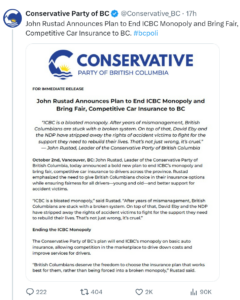
BC Conservatives Promise to “end ICBC’s monopoly” and Restore Rights For Crash Victims

Its election season. And promises are being made.

The BC NDP have stripped crash victims of their rights.  There are many horror stories of people maimed, disabled and even killed by negligent drivers being stripped of the right to sue and lacking the ability to seek proper compensation for their financial and other losses following such tragedy.

The BC Conservative Party has gone on record saying they will end ICBC’s monopoly and restore rights for victims with life altering injuries.

Their full position reads as follows.

I have reached out to the Conservative party via X requesting clarity on what they mean by their promise to

make sure anyone with life altering injuries has the right to representation and the ability to fight for the support they need”.

I will update this post should they reply.

Reporter Rob Shaw states notes as follows:

No fault insurance will remain in place, along with caps on minor soft tissue injuries, but those with “life altering injuries” will be exempted and allowed to sue for compensation, according to Conservative policy

https://x.com/RobShaw_BC/status/184162803274793372020

$5,000 In Damages Awarded For “Reprehensible and Disgusting” Stealing of Intimate Images

BC’s new Intimate Images Protection Act makes it relatively quick and easy to sue someone who has your intimate images without your consent (or even with your withdrawn consent).

A recent case shows that a victim of wrongdoing under the Act should choose wisely which forum they sue in.  While the online Civil Resolution Tribunal can process such claims faster and cheaper than traditional court, the damages limit in the CRT is at $5,000 and such cases can be worth far more.  Reasons for decision were published this week by the CRT commenting on this.

In the recent case (JT v. Sowinski) the applicant had intimate images stored on her phone.  The respondent accessed these without permission and sent them to himself.  The applicant confronted him and he went so far as to threaten to post them on social media.

In awarding the maximum damages allowable while making it clear that more damages are warranted the CRT provided the following reasons summarizing the wrongdoing and assessment of damages:

Continue reading

Intimate Image Claims Worth “Considerably More” Than $5,000

The first precedent has been handed down invoking BC’s new Intimate Images Protection Act.  In short the legislation makes it unlawful to share intimate images of another person without their consent.  Even if you initially obtained the images consensually.  The law is broad in its reach.

The law allows civil claims to be prosecuted in the Civil Resolution Tribunal, Provincial Court, or Supreme Court.  Choosing the CRT is faster, cheaper and easier.  But the CRT has a limit of $5,000 in damages in these types of claims.  In today’s case the CRT found that these cases, once liability is established, are worth ‘considerably more’ than their limit so awarding the $5,000 seems to be a default damage assessment in that venue.

In the recent case (BDS v. MW) the applicant shared semi nude images of a sexualized nature with the respondent.  The respondant shared these with another without the applicant’s consent.  The key facts and findings were as follows where the CRT provided some worthwhile comments on the definition of what constitutes an intimate image along with damage assessments:

Continue reading

ICBC Ordered To Pay Over $400,000 After Denying Widow Death Benefits Following Fatal Crash

Reasons for decision were published last week by the Civil Resolution Tribunal ordering ICBC to pay over $400,000 in benefits and interest after finding they wrongly denied a widow spousal death benefits following a fatal collision.

In the recent case (Dion v. ICBC) the Applicant’s spouse died in a motorcycle collision in 2022.  The Applicant applied for the spousal death benefit but ICBC refused to pay arguing that they were living separately at the time of the crash and therefore no longer spouses as defined in the applicable regulation.

Vic Chair Eric Regehr found that ICBC was wrong in denying the benefit and found that the Applicant was still the Defendant’s spouse despite them living separately.  In doing so the Tribunal provided the following reasons noting living together is not a requirement under section 45(b) of the regulation:

Continue reading